
PCOS and Fertility: How Acupuncture May Support Your Journey
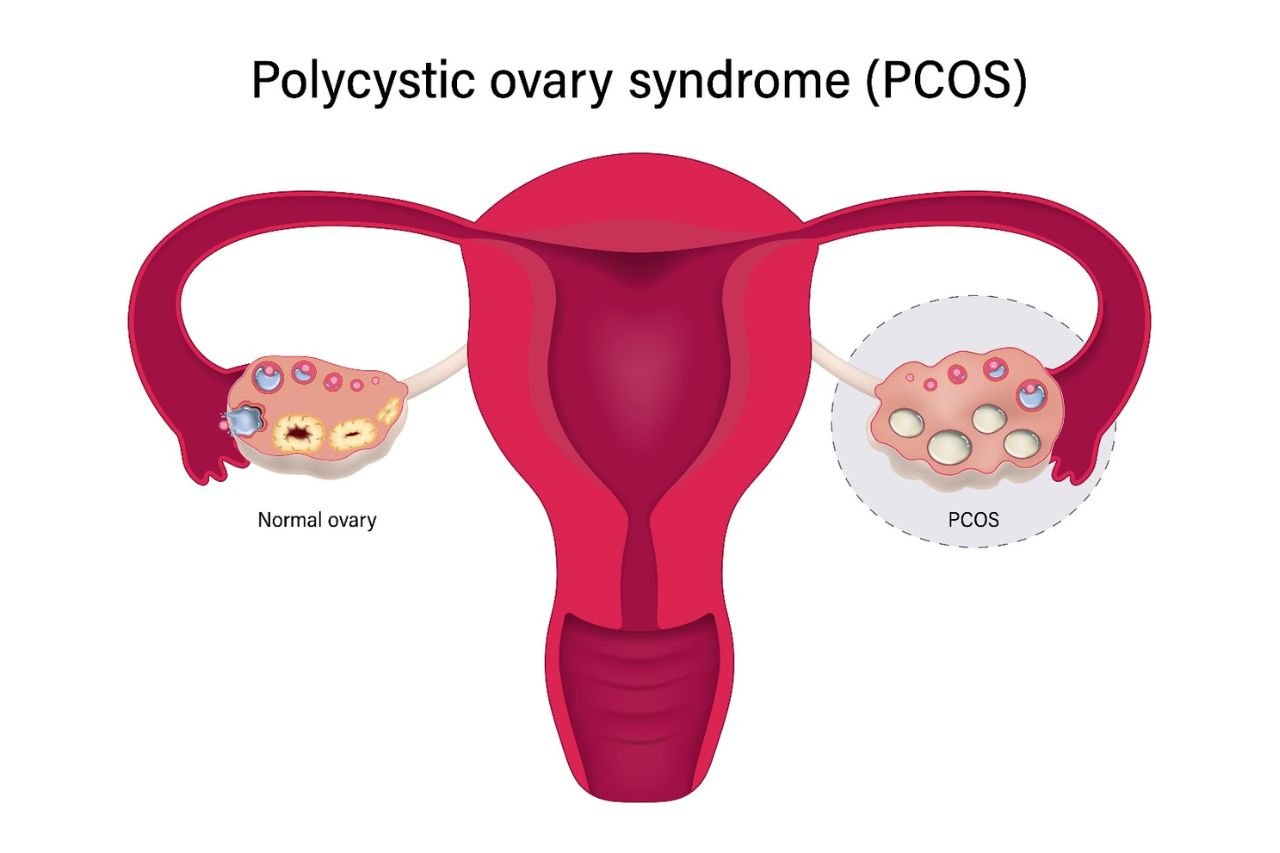
If you've been diagnosed with polycystic ovary syndrome (PCOS) and you're trying to conceive, you already know how confusing this condition can be. Cycles that show up whenever they want. Ovulation you can't quite pin down. Test results that don't always match how you feel. And through all of it, the quiet, persistent question: will I be able to get pregnant?
Here's what the research actually shows: PCOS is common, it's manageable, and it does not mean pregnancy is out of reach. According to the World Health Organization, PCOS affects an estimated 10–13% of women of reproductive age worldwide, making it one of the most common hormonal conditions a woman can have, and notably, up to 70% of women with PCOS remain undiagnosed, often for years. If you finally have a name for what you've been experiencing, you're already ahead of many.
At Lotus Spring Acupuncture Fertility and Wellness in Utah, we work with women navigating PCOS every day. This guide walks through what PCOS is, how it affects fertility, what the research says about acupuncture as a complementary therapy, and how a whole person approach, combining medical care, nutrition, movement, stress management, and acupuncture, may support your path to conception.
What is PCOS, and Why is it so Common?
Polycystic ovary syndrome is a hormonal and metabolic condition, not just a "period problem." It's currently recognized as the most common endocrine disorder among women of childbearing age, with global prevalence estimates ranging from roughly 6% to 20% depending on which diagnostic criteria are used. In the United States specifically, diagnosed rates hover around 5%, though many clinicians believe the true number is significantly higher because so many cases go unrecognized.
PCOS doesn't look the same for everyone. Common features may include:
Irregular or absent menstrual periods
Infrequent or unpredictable ovulation
Elevated androgen levels or related symptoms
Acne Increased facial or body hair
Thinning scalp hair
Metabolic or insulin-related concerns
Difficulty conceiving
You don't need every symptom on this list to have PCOS, and two women with the same diagnosis can have very different day-to-day experiences. That's exactly why individualized evaluation, not a one-size-fits-all protocol, matters so much. For a deeper look at how different PCOS presentations relate to infertility and what treatment options exist, see our guide to PCOS treatments for infertility.
Interestingly, recent global data also shows a shift in who is being diagnosed: research analyzing decades of health data found that the age group with the highest PCOS prevalence has moved from women in their early twenties to women in their early thirties, right in the heart of the childbearing years. Researchers believe this reflects a widespread pattern of delayed diagnosis, where many women aren't identified until they're actively trying to conceive and run into difficulty.
How Does PCOS Affect Fertility?
The connection between PCOS and fertility mostly comes down to one thing: ovulation.
PCOS is responsible for an estimated 70–80% of anovulatory infertility cases, meaning cases where infertility is linked to the ovaries not releasing an egg on a predictable schedule. When ovulation is irregular or absent, there are simply fewer windows each cycle for conception to occur. Irregular cycles also make it much harder to identify your fertile window using calendar-based methods alone, which can add frustration on top of an already stressful process, and this is important, PCOS affects everyone differently.
Some women with PCOS ovulate consistently and conceive without major difficulty. Others experience significant irregularity and need more support. Comparing your journey to someone else's, even someone with the same diagnosis, usually isn't a useful measuring stick. Understanding your own cycle, your own labs, and your own body is what actually moves you forward.
PCOS Is About More Than Your Period
It's tempting to think of PCOS purely as a menstrual cycle issue, but the condition touches nearly every system connected to hormonal and metabolic health. A comprehensive approach typically looks at:
Menstrual patterns
Ovulation
Nutrition
Physical activity
Sleep
Stress
Metabolic health (including insulin sensitivity)
Medical history
When appropriate, your physician may also recommend lab testing, medication such as letrozole or clomiphene, or a referral to a fertility specialist. None of the lifestyle and complementary strategies below are meant to replace that medical care, they're meant to work alongside it.
What Does the Research Say About Acupuncture and PCOS?
This is the question we hear most often, and it deserves an honest answer: the research on acupuncture for PCOS is genuinely promising, still evolving, and should be viewed as a complementary therapy rather than a replacement for medical diagnosis or treatment.
Here's a look at where the evidence currently stands:
Ovulation and menstrual regulation. A systematic review and meta-analysis published in the journal Medicine, which pooled data from multiple randomized controlled trials, found that acupuncture was associated with meaningful improvements in both ovulation rate and menstruation rate compared with control groups. The authors described this as a promising, though still developing, level of evidence, a common and honest caveat across PCOS acupuncture research.
Acupuncture alongside fertility medication. A 2025 randomized, single-blind, sham controlled clinical trial conducted at Xiyuan Hospital (China Academy of Chinese Medical Sciences) followed 134 women with PCOS-related infertility who were also taking letrozole, a standard ovulation-induction medication. Women who received real acupuncture alongside letrozole saw their pregnancy rate roughly double compared to the sham acupuncture group (56.7% vs. 29.9%), along with a 57% increase in ovulation rate during treatment, reduced testosterone levels, and improved markers of uterine receptivity. Because this trial was sham-controlled, meaning the comparison group received a realistic looking but inactive treatment, it's considered a more rigorous design than many earlier PCOS acupuncture studies. If your fertility journey includes IVF, similar principles may apply, see our article on acupuncture for IVF: benefits, timing, and how it supports your fertility journey for more on how acupuncture is used alongside assisted reproductive treatment
Hormonal effects. Other clinical research has examined acupuncture's impact on androgen (testosterone) levels, which are often elevated in PCOS and linked to symptoms like acne and excess hair growth. Some studies on lower-frequency electroacupuncture have reported meaningful reductions in circulating testosterone alongside increases in estradiol after a course of treatment.
The honest caveat. A 2022 overview of systematic reviews in the European Journal of Obstetrics & Gynecology and Reproductive Biology concluded that while acupuncture appears beneficial for fertility, endocrine, and metabolic outcomes in PCOS, the overall quality of existing studies is inconsistent, and larger, higher-quality trials are still needed before firm conclusions can be drawn. The same review noted that acupuncture's side effect profile is mild, occasional soreness, minor bruising, or bleeding at needle sites, with no serious safety concerns identified.
How acupuncture may work. One proposed mechanism involves acupuncture's effect on beta-endorphin production, which may influence gonadotropin-releasing hormone (GnRH) secretion, a hormone signal that plays a central role in regulating ovulation and the menstrual cycle. Research also points to potential effects on insulin sensitivity, which matters because insulin resistance is common in PCOS and can worsen hormonal imbalance.
Here's a quick summary of the research referenced above:
This table summarizes published findings for informational purposes; it is not a guarantee of individual results, and study quality varies as noted above.
The bottom line: the direction of the evidence is encouraging, particularly for ovulation support, hormone regulation, and use as an adjunct to standard fertility treatment. But acupuncture research in this area is still maturing, and it should be positioned as one part of a broader care plan, never a substitute for medical evaluation and treatment.
How Lotus Spring Approaches PCOS and Fertility Support
At Lotus Spring Acupuncture Fertility and Wellness, treatments are individualized, because two people walking in with the same PCOS diagnosis may have completely different symptoms, lab values, and fertility goals. Acupuncture sessions are typically used to support:
Stress management and nervous system regulation
Relaxation and sleep quality
Menstrual and reproductive wellness
Overall well-being throughout a demanding fertility journey
Many patients describe their acupuncture sessions as one of the few times each week they're able to truly slow down, which matters more than it might sound, given how much stress often surrounds trying to conceive.
Nutrition and PCOS: There's No Single "PCOS Diet"
Despite what you may have read online, there is no single diet that works for every woman with PCOS. Instead, the goal is building sustainable habits that support metabolic and reproductive health long-term. Consider building meals around:
Quality protein
Fiber-rich vegetables and fruits
Whole-food carbohydrates
Healthy fats
Minimally processed foods
Extreme or highly restrictive diets tend to backfire, both physically and emotionally. An approach you can actually maintain, even if it's not "perfect", will almost always outperform a rigid plan you abandon after three weeks. If you have specific metabolic concerns, such as insulin resistance, working with a qualified healthcare provider or registered dietitian can help you build a more targeted plan.
Movement Matters, But Not the Way You Might Think
Regular physical activity supports cardiovascular health, metabolic function, sleep quality, mood, and stress resilience, all of which are relevant to PCOS management. This doesn't mean punishing workouts or daily high-intensity training.
Walking, resistance training, yoga, cycling, and swimming can all have a place, depending on your body, your preferences, and how you're feeling week to week. What matters far more than intensity is consistency. A moderate routine you actually stick with will do more for your hormonal and metabolic health than an extreme program you can't sustain.
Don't Underestimate Stress and Sleep
Trying to conceive with unpredictable cycles is stressful enough on its own. Add the pressure of "doing everything right," and it's easy to end up in a cycle of anxiety that makes the whole process feel heavier than it needs to be.
Prioritizing restorative sleep and finding realistic ways to decompress isn't a luxury, it's part of the care plan. For many of our patients, acupuncture becomes exactly that: a scheduled, protected time to slow down and focus on their well-being, rather than one more task on an already long list.
For more practical, evidence-informed strategies beyond what's covered here, take a look at our article on 9 natural ways to boost fertility and help you get pregnant.
PCOS Requires Personalized Care, Not a Generic Protocol
If there's one message we want every patient with PCOS to walk away with, it's this: your fertility journey doesn't have to look like anyone else's.
Your symptoms, your cycle patterns, your medical history, your lifestyle, and your fertility goals are unique to you. A thoughtful fertility plan typically combines appropriate medical care, labs, physician guidance, and medication when indicated, with nutrition, movement, sleep, stress management, and complementary therapies like acupuncture, all tailored to where you are right now.
Frequently Asked Questions
Can I get pregnant naturally with PCOS? Many women with PCOS conceive without fertility treatment, though ovulation irregularity can make timing more challenging. Working with a physician to understand your specific ovulation pattern is the best starting point.
Is acupuncture a replacement for fertility medication? No. Current research most strongly supports acupuncture as a complementary therapy used alongside standard medical care, not as a stand-alone replacement for it.
How many acupuncture sessions are typically recommended for PCOS support? This varies widely by individual, symptoms, and goals. Many of the studies referenced above used treatment courses lasting several weeks to a few months, but a personalized plan is something to discuss during a consultation.
Is acupuncture safe? Research generally describes acupuncture as low-risk, with only mild, temporary side effects such as minor soreness or bruising at needle sites reported in clinical studies.
Take the Next Step in Your Fertility Journey
PCOS can make the road to pregnancy feel unpredictable, but you don't have to sort through it alone. At Lotus Spring Acupuncture Fertility and Wellness, serving patients throughout Utah, we provide individualized, whole-person care built around your specific fertility goals, combining acupuncture with practical support for nutrition, movement, sleep, and stress management.
Ready to explore a whole-person approach to your fertility journey? Contact Lotus Spring Acupuncture Fertility and Wellness today to schedule a fertility consultation.
This article is for educational purposes only and is not a substitute for professional medical advice, diagnosis, or treatment. Always consult your physician or a qualified healthcare provider regarding PCOS diagnosis and fertility treatment options.
Sources referenced: World Health Organization; systematic review and meta-analysis, Medicine (2017); randomized controlled trial, Xiyuan Hospital/China Academy of Chinese Medical Sciences, published in European Journal of Obstetrics & Gynecology and Reproductive Biology (2025); overview of systematic reviews, European Journal of Obstetrics & Gynecology and Reproductive Biology (2022); Global Burden of Disease Study 2021 analyses